
The advantages of the 4-day week

The 4-day week is on a lot of lips right now. While some fear it and don't believe in it, others have decided to try it or have been embracing it for a while. To help you see more clearly, here's a look at this new practice that's likely to grow in popularity in the coming years (and we're rooting for it at Boite Pac).
What is the 4-day week?
The 4-day-week concept isn't about asking employees to work less for less pay. To us, the idea is to offer the same pay while letting them work fewer hours. That can mean cutting a day from the week (hello Fridays off) or redistributing the hours differently from Monday to Friday, working a bit less each day. Bottom line: working just as hard, but differently.
So that you're as excited as we are about the shorter week, here are 4 benefits that might convince you to adopt it. We'll then suggest a few ideas to equip yourself well IF you'd like to introduce the concept in your own company. Not convinced after that? We'll grab a coffee or a beer to talk it over :)
Benefit 01: Employees working 4 days are more productive
The more time we have in our week, the more we waste! Speaking for myself, when I have a deadline, I cut unnecessary actions to be more effective (checking email 20 times a day, spending too much time on LinkedIn or Instagram, etc.). That's also what New Zealand's Perpetual Guardian observed when implementing the shorter week — less time in meetings, less time on social media, and mechanisms to avoid being constantly interrupted by colleagues. The company saw that productivity was indeed affected — positively.
Benefit 02: Employee stress goes down
With more time for personal activities, new hobbies and friends and family, employees are less stressed by work. That's one of many results observed by Iceland when its government asked 2,500 public-sector workers to cut a day from their workweek. Another striking finding: better work-life balance, reducing the risk of burnout.
Benefit 03: The 4-day week reduces gender pay gaps
According to The Guardian, the number of women who work part-time — often to juggle family life and work — is 4x higher than men. Part-time often means lower pay and less chance of promotion. You see where this is going: treating 4-day weeks as full-time and giving women access to the same pay as their male counterparts is a step in the right direction — equity.
Benefit 04: The 4-day week reduces a company's environmental impact
We saw it during the pandemic: going to the office less often reduces individual transport pollution. It's easy to imagine that one less workday per week could meaningfully reduce each person's carbon footprint. A study run in England showed that cutting one workday could lower the country's annual carbon footprint by 21.3%. Not nothing.
If you want to implement the 4-day week, what's next ?
Step 01: Survey your employees to gather their take
A project as big as the 4-day week clearly requires participation and mobilization from your team. A survey is a great way to learn about their impressions, concerns and special requests about changing their work time. You'll get relevant data to roll out the initiative on solid ground.
Step 02: Share methods to help the team improve efficiency
Working 4 days means having about 8 fewer hours a week to get things done. Some employees will adapt their methods naturally; others will struggle. To help, suggest things like:
1- Cutting meeting times in half
2- Setting clear focus windows in the day where employees can't be interrupted by colleagues.
3- Offering equipment to improve productivity (sit-stand desks, noise-cancelling headphones, etc.). Let them shape their own workspace too!
Step 03: Try it before locking it in
Don't try to find the winning recipe before testing different formulas. Try various models with your team and measure the results to see which 4-day formula fits your company and team best. For example, give everyone Fridays off for a month and look at the outcomes — productivity, satisfaction, etc. Then send a short survey to the team and try a different formula the next month (e.g. Mondays off), continuing to gather data.
Hope you see more clearly now and that you're as excited as we are about this topic. If you're curious to learn more or considering moving to 4 days, contact us about our 4-day support service!
Article written by Alexandra, B Corp consultant (she/her)
Read next
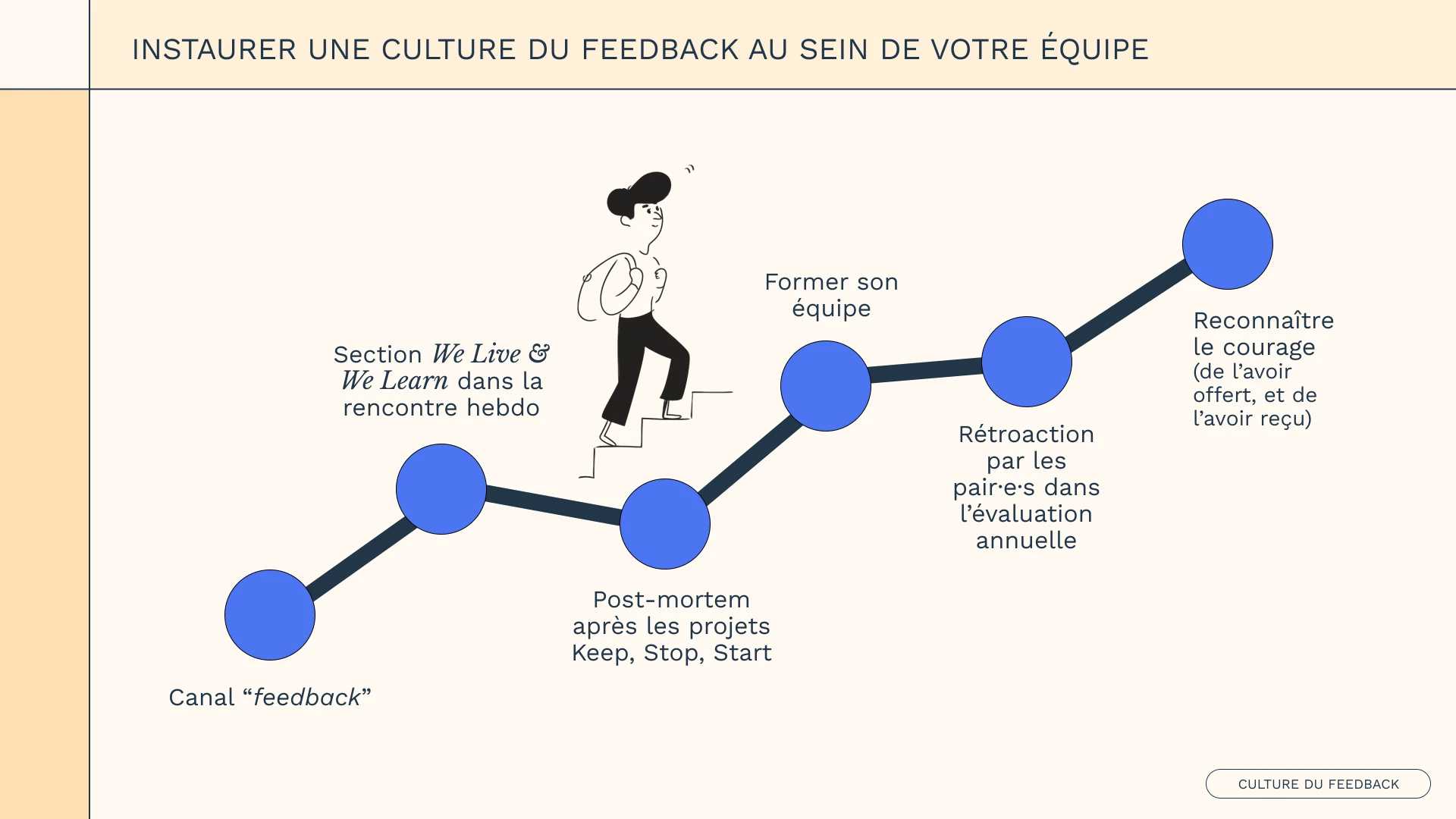
How to give feedback to an employee: a guide for managers
Seven practical steps and real-life examples for giving employees feedback that recognizes good work, addresses problems, and helps them grow.
Read article
Everything you need to know about the new B Corp 2026 standards
B Corp certification is changing deeply. After a major overhaul published in April 2025 and a clarified version in August 2025, the new standards will become the official certification reference starting in 2026.
Read article