
B Corp Certification: Steps, Costs and Timeline (2026)
Updated September 29, 2026 — to reflect the new B Corp standards that came into effect this year.
Wondering what B Corp certification actually is, what it requires and what it costs? Here are the essentials, jargon-free: what it is, how B Lab assesses you, how much time and money to budget, and where to start if you're beginning from scratch.
What is B Corp certification?
B Corp (Beneficial Corporation) is a certification awarded to for-profit companies that meet the highest standards of social and environmental impact, ethical governance and transparency towards the public.
It was born in 2006 in Pennsylvania, United States, on the initiative of the B Lab, a non-profit organization. The B Lab is the body that verifies companies' answers and grants (or refuses) certification.
What sets it apart from other certifications:
- It is the only one that assesses a company's entire social and environmental performance, rather than a single dimension (energy, materials, one supply chain).
- It requires periodic accountability: once certified, a company has to prove its progress holds up.
- It opens the door to an active business community that meets regularly, in person and online.
How does B Lab assess a company?
B Lab created the B Impact Assessment, a questionnaire available free of charge online that lets a company measure its own impact long before deciding to certify.
Companies answer dozens of questions spread across 5 categories:
- governance
- employees
- community
- environment
- customers
What changes in 2026: the overall-score method (80 points out of 200) gives way to the new B Corp standards, built around 7 impact topics with requirements to meet, verified by external independent auditors rather than by the B Lab alone. In practice, a weak area can no longer be "offset" by a strong one: each requirement has to be met on its own.
How to get certified, step by step
- Complete the B Impact Assessment. Free, online, and useful even if you never certify: it gives you an honest read of your practices.
- Meet the standard requirements. Write the documentation you're missing (code of ethics, employee guide, risk management policy…), roll out concrete and measurable initiatives, and close the gaps.
- Lock in your mission. Adopt a legal framework that requires the company to weigh the wellbeing of its stakeholders equally with the growth of its profits.
- Pay the submission fee and file your assessment with the B Lab to enter the verification phase.
- Pass the verification. An independent review of your answers and of the evidence behind them.
- Publish your impact report in the B Corp Directory and join the community.
Worth noting: only for-profit organizations operating for at least one year are eligible, and some industries are excluded outright by the B Lab. Companies less than a year old can go through Pending B Corp while they build a track record to assess. Non-profits are not eligible for certification, but can still use the B Impact Assessment free of charge to structure their practices.
How much does B Corp certification cost?
Here is what to budget for:
- The B Impact Assessment: free. Nothing forces you to spend a dollar to find out where you stand.
- Submission fees: a one-off amount, paid in US dollars when you file the assessment, non-refundable.
- Annual certification fees: based on gross annual revenue. In the B Lab US & Canada 2026 grid, they start at US$2,100 per year for a company with revenue under US$5 million, and rise with company size. B Lab capped the 2026 increase at 5%.
- Outside support, if you choose to get some. This is the most variable line item, and usually the one that saves the most time.
A detail people forget: the real cost isn't just the invoice, it's the internal hours. Gathering evidence, answering questions, documenting things that were never written down — that's where certification projects fall behind schedule.
How long does it take?
B Lab asks companies to plan for at least 12 months between starting the assessment and getting certified. In practice, the duration comes down to three things: company size, how many people are involved in gathering the information, and the state of your documentation on day one.
A company that already has its policies in writing and tracks its data starts with a serious head start. A company that has to write everything while filling out the questionnaire will almost always double its timeline.
Is it worth it?
It's the first question we get asked, and the honest answer is: it depends on what you do with it.
What certification genuinely delivers:
- It puts you in step with the ESG requirements of large clients and financial partners, which keep tightening.
- It creates a real point of difference in an industry where everyone claims to be "responsible".
- It makes hiring easier: a share of candidates now actively filter on proof like this.
- It helps keep your people, who want meaning and consistency.
- It opens business opportunities through the B Corp community.
- It improves the visibility and reputation of your brand.
- It forces you to document and measure, which makes improvement possible where "we're a responsible company" led nowhere.
What it does not do: it won't transform a company culture on its own, and it is no substitute for a genuine commitment. If the only goal is to put a logo on the website, the return on investment will be disappointing — and people notice.
Who is already certified?
There are currently more than 9,000 certified B Corps across more than 75 countries, including several hundred in Canada. Each stands out in its industry for its societal and environmental practices and its desire to redefine success in business.
A few certified B Corps in Quebec (see the full list): Prana, GenV, Ciele, LG2.
A few certified B Corps internationally: Patagonia, Danone, TOMS, Ben & Jerry's.
Going further
- Why become a B Corp: the concrete benefits for a small or mid-sized business.
- Our B Corp certification support, one company at a time.
- B Corp certification in a group cohort, with shared costs.
- B Corp recertification, for companies already certified.
💡 Need a hand with your B Impact Assessment? We'd be glad to support you for a free 30-minute call. Book a time with us 👋
Article written by Thomas, B Corp consultant (he/him).
Read next
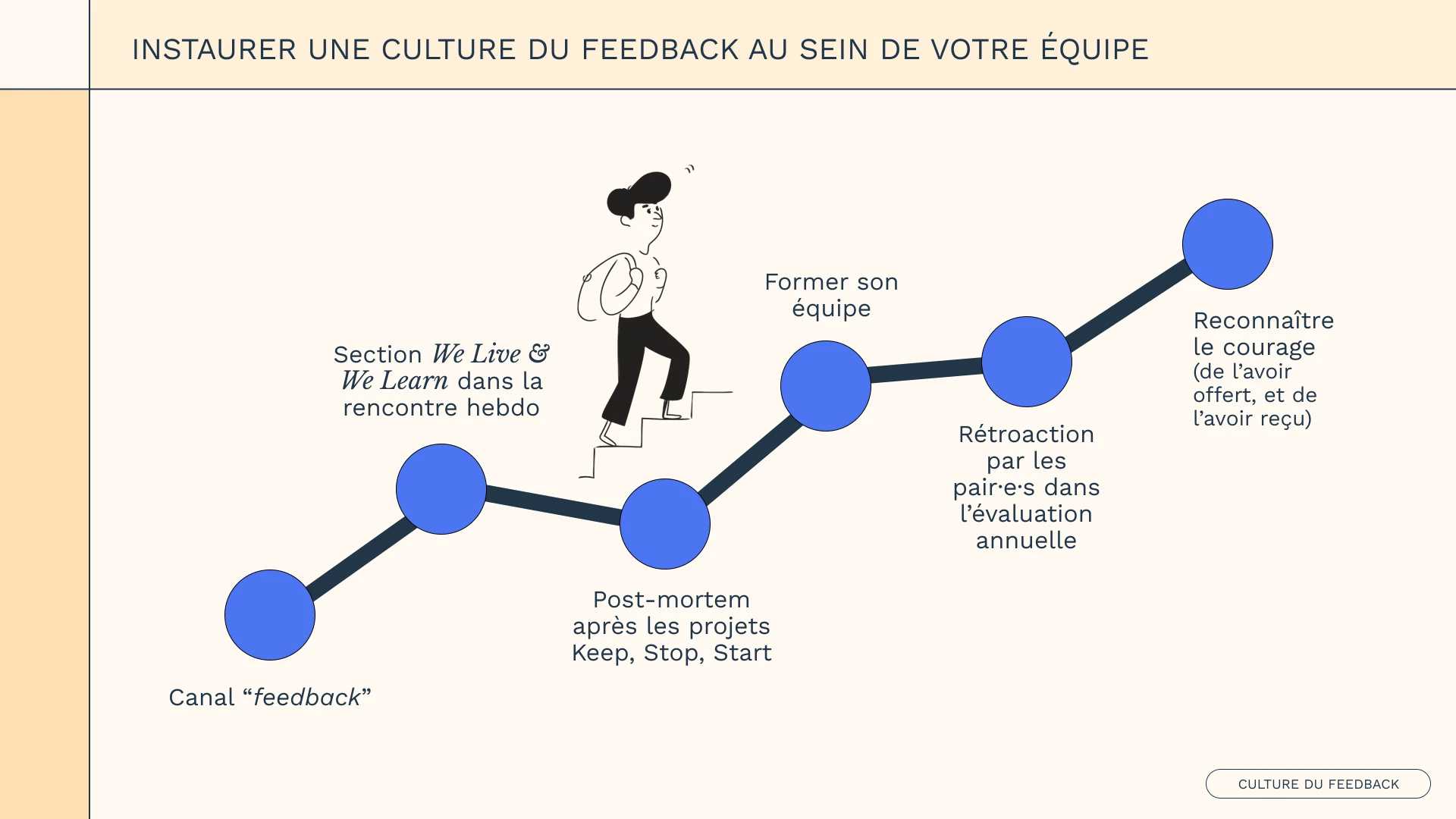
How to give feedback to an employee: a guide for managers
Seven practical steps and real-life examples for giving employees feedback that recognizes good work, addresses problems, and helps them grow.
Read article
Everything you need to know about the new B Corp 2026 standards
B Corp certification is changing deeply. After a major overhaul published in April 2025 and a clarified version in August 2025, the new standards will become the official certification reference starting in 2026.
Read article