
All about the new B Corp standards
What's going on at B Corp 🤔
Society is changing and evolving!
Good thing, so is the B Corp assessment process 😎
For years now, B Lab (the non-profit that runs B Corp) has used a questionnaire where 80 out of 200 points are needed to earn certification.
A company could therefore choose which initiatives to deploy to reach a score at or above 80.
To more effectively assess large companies and multinationals, and to better reflect today's challenges, B Lab decided to do a full review of its assessment process.
“Tell me some good news 😍”
It's now 7 standards to meet rather than a score to reach.
What are these 7 standards 👀
Baseline requirements 🔍
The company must first meet B Corp's baseline criteria before diving into the assessment. That includes updating its legal documents to add the required legal clauses and meeting the eligibility conditions.
-
Mission and Stakeholder Governance ⚖️
The company ensures that leadership monitors and takes the necessary steps to improve social and environmental impact. It is also transparent about its social and environmental performance, its targets, and how it includes its stakeholders (employees, suppliers, customers, shareholders).
-
Human rights 🤝
The company involves employees in decision-making in a concrete and formalized way. It measures team satisfaction and acts to improve it. It also ensures it eliminates negative human-rights impacts and that its main suppliers do the same.
-
Fair work 💵
In addition to doing what's needed to ensure pay equity, the company pays at least a living minimum wage to its team. It also engages its main suppliers to do the same with their own teams.
-
Justice, equity, diversity and inclusion (JEDI) 💙💛
The company actively improves its JEDI practices with a clear action plan communicated to internal and external stakeholders.
-
Climate action 🌎
The company measures its greenhouse-gas emissions each year and sets science-based targets aligned with keeping global warming below 1.5 °C.
-
Environmental stewardship and circularity ♻️
The company takes the steps needed to understand its negative environmental impact and builds a strategy to reduce its carbon footprint. It also works with its suppliers to reach its environmental goals.
-
Public affairs and collective action 🤜🤛
The company collaborates with its stakeholders to increase collective social and/or environmental impact at the policy, industry and/or business-community level.
Should I get certified under the current method or wait?
Is it easier to certify now? For companies with more than 250 employees or annual revenue above 75 million, the answer is yes. For other companies, not necessarily.
While the exact form of the new-standards assessment is still becoming clearer, we can assume that the current questionnaire allows for greater flexibility.
“So do I wait or not? 😅”
If you want a clear view of the assessment process, start now to submit your questionnaire before the end of 2025 — the deadline to certify under the current method.
“Yeah, but I would have liked to certify under the new standards. 😢”
Good news: companies must recertify every 3 years. Recertification will definitely happen under the new standards.
Still have questions? Totally normal — book a moment with me to talk it through 🙂
Guide written by Thomas, B Corp consultant (he/him)
Read next
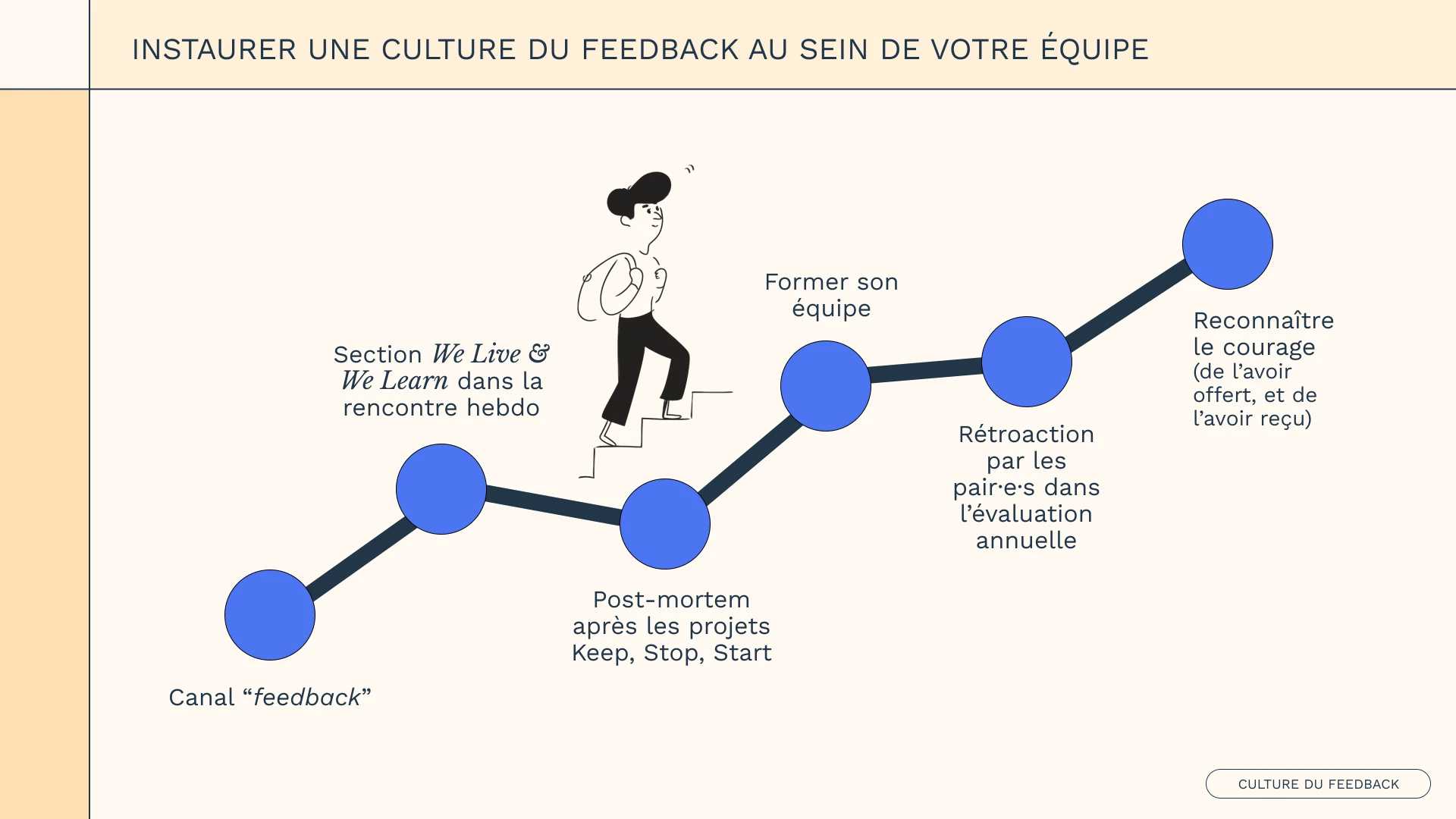
How to give feedback to an employee: a guide for managers
Seven practical steps and real-life examples for giving employees feedback that recognizes good work, addresses problems, and helps them grow.
Read article
Everything you need to know about the new B Corp 2026 standards
B Corp certification is changing deeply. After a major overhaul published in April 2025 and a clarified version in August 2025, the new standards will become the official certification reference starting in 2026.
Read article